
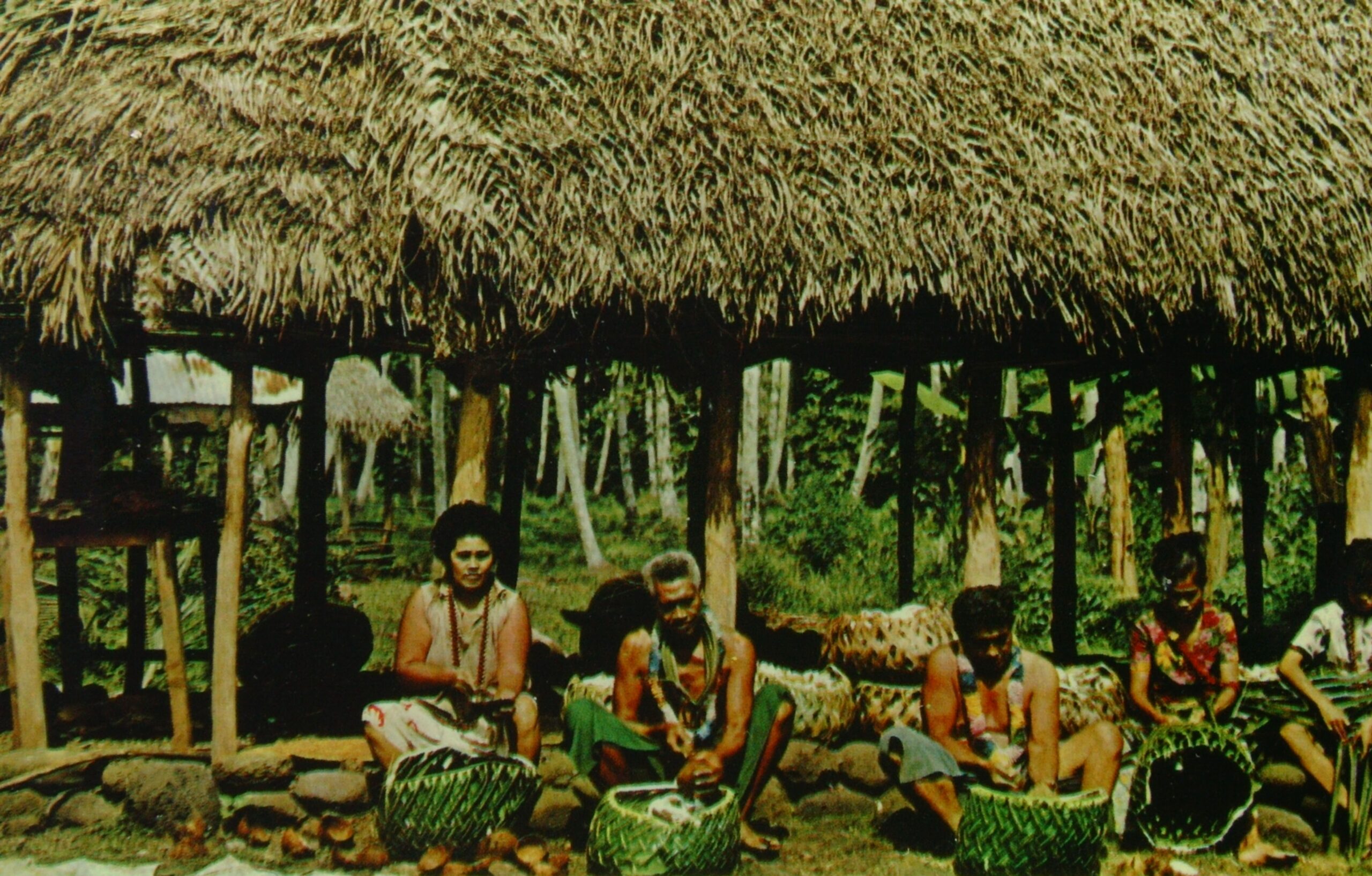
paradise in samoa
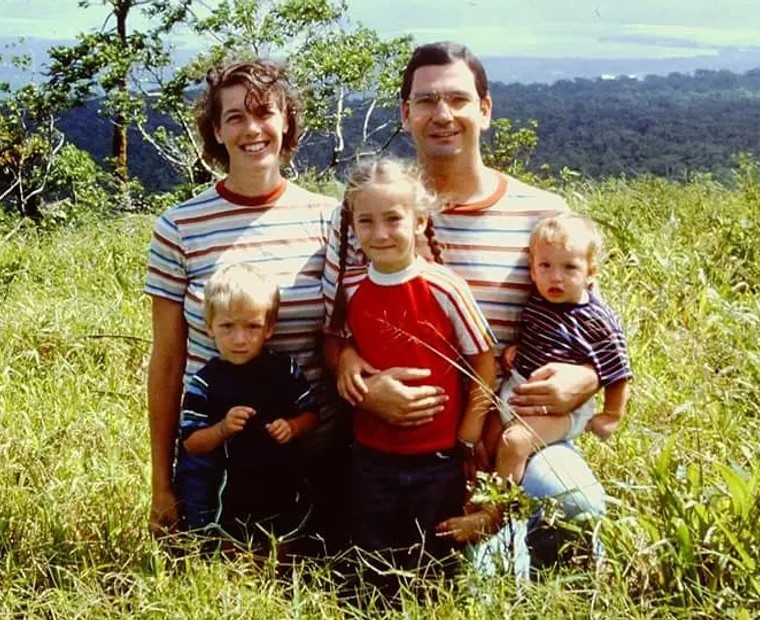
Obtaining passports and other necessary documentation for the overseas assignment took a few months. Kathy and the kids stayed with her mom while we prepared everything. We rented our house out and had all our belongings put in storage. Foolishly, I was not present while the house was being packed. The packing crew stole many household items, including a rifle that my dad gave me when I was young.
The Samoa Regional Office, where we were headed, reported to the Hawaii Area Office. We went to Hawaii in March 1981 for training. My training time left Kathy and our two children in the hotel. Kathy was seven months pregnant at the time, and touring Hawaii with two small children in tow was unappealing. I managed some personal leave to tour when the training was complete. Among a few other places, we went to the Polynesian Cultural Center. This was a great cultural experience and good exposure to my future in Samoa.
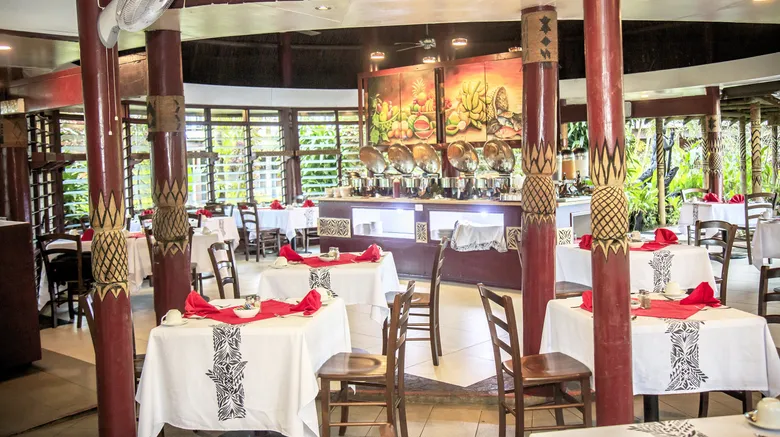
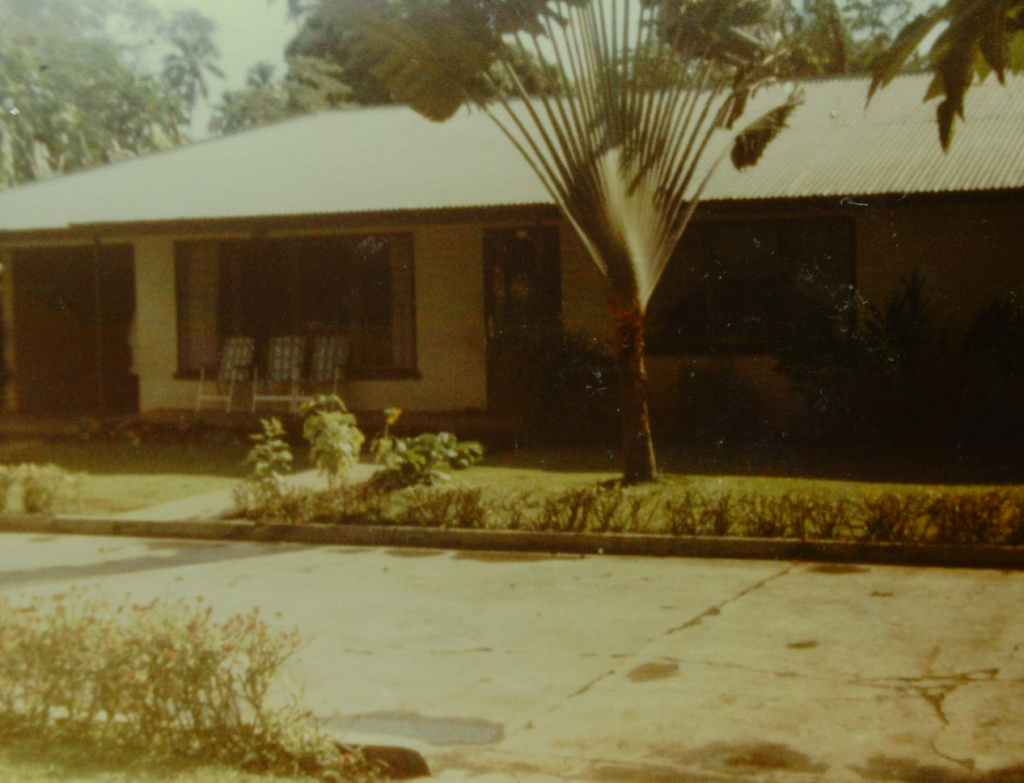
The heat and humidity were initially shocking when we arrived in Pago Pago, American Samoa. It felt like someone had thrown a hot, damp towel into my face. Kathy’s feet were swollen from the flight and her pregnancy. My new boss met us there. We then flew to Faleolo Airport, in Western Samoa, and drove to the Tusitala Hotel, where we stayed for several weeks. Our new home was to be in Moto’otua, near Apia. The Church had a housing complex there. The housing was reserved for expatriate Presiding Bishopric employees (like me), expatriate Church Education System employees (the Church maintained small elementary and high schools there), and the mission president’s family. The house we were to live in needed some repairs, so we stayed in the Tusitala Hotel until repairs were complete.
One morning, during breakfast at the hotel, the family was dining together when thunder struck the fale, which had no outside walls, where we were eating. The sound was enormous, and Melissa, at four, jumped across the table into my lap.
The meals here were interesting. Fa’a Samoa, the Samoan way, every time you clear your plate that is a clue that you are still hungry. More food keeps coming until you leave something behind. We learned that this is the practice in every Samoan meal. Leave something on the plate!!
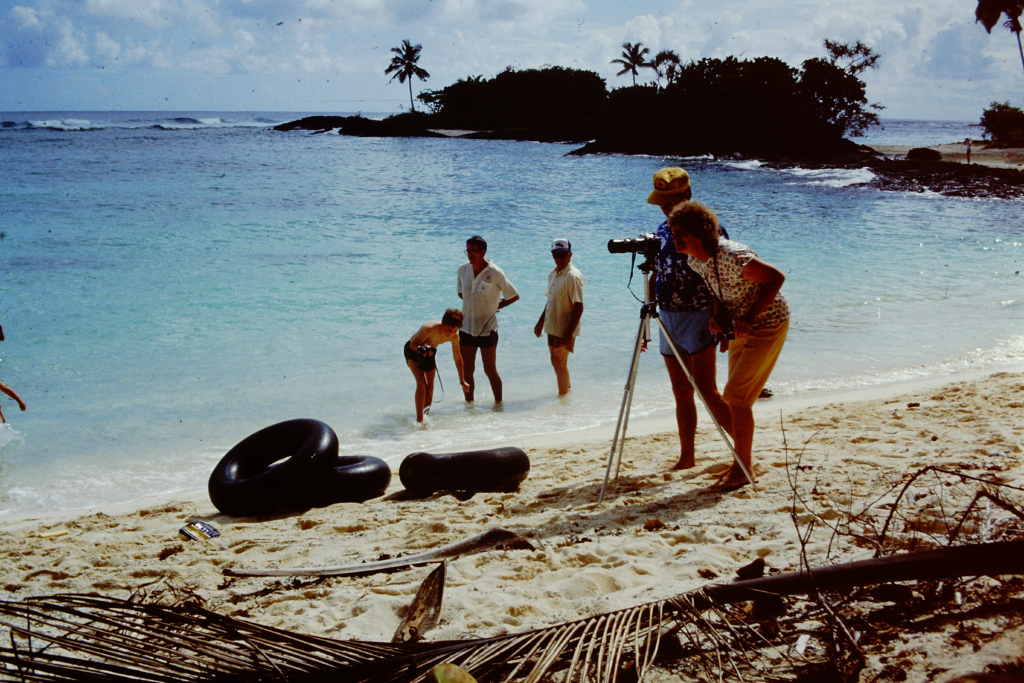
A few weeks after we arrived in Samoa, we decided to take a sightseeing drive around the island. We had purchased a van, but it hadn’t arrived yet. So, we drove a Church-owned van. As we circled the island, we ended up on a beach somewhere on the opposite side from home, having no idea where we were or how to get back home. This is tough to do when the entire island is only 25 miles across. We drove along the beach, hoping to find someone who could speak English and give us directions. Finally, we found someone who got us back on the main highway and headed for home. In a few miles, the van got a flat tire. And there was no spare tire. We walked to a telephone booth we had noticed, but the phone was out of order. (Just like in the U.S.) We then started walking towards Apia, some 10 miles away. When we walked past a village, a man stopped us. (For some reason, a couple of white people walking along the highway, one eight months pregnant, with two small children, was an unusual sighting there.) He turned out to be a matai, or village chief. He spoke English. We explained our situation and he offered to help. He told us about another Church member who had helped him at a time of need, and he wanted to pay it forward. While waiting for a bus to come by, he took us on a tour of his village. He fed us. We then realized that we had no Samoan money with which to pay for the bus ride home. (Tourists!!) So, he stopped the bus, paid our fare, gave the driver instructions on where to drop us off. Then we rode home with passengers, pigs, and chickens. We got to see the authentic Samoa. He had boys from his village take turns watching over our van until we sent someone back to bring the van home. Kathy then baked a chocolate cake, and we returned to the village to give it to the man who helped us. This time, our car had a spare tire.
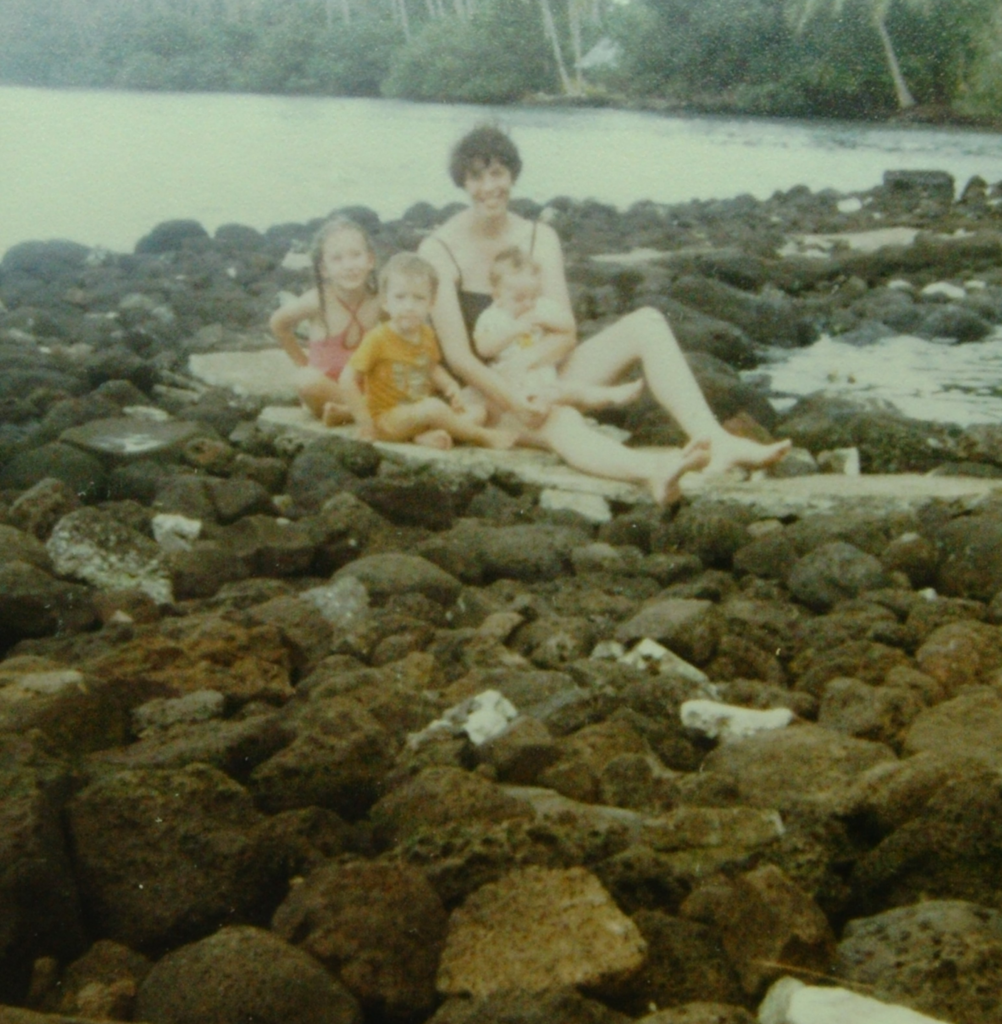
Kathy was seven months pregnant when we arrived in Samoa. Before coming, she had been told that the hospital had a new maternity wing. They overlooked telling the fact that the new wing was equipped with 40-year-old equipment shipped from the U.S. The Samoan government strike had been a central news story since our arrival. The week before Ben’s arrival, the strike advanced to include the hospital employees, including government paid doctors and nurses. Kathy went into labor during the strike. Two nuns oversaw the maternity wing. We hired a private doctor to make the delivery. He didn’t believe Kathy when she told him to be ready to deliver after 30 minutes of labor. As promised, Kathy delivered quickly. The doctor and his wife (also a doctor) quickly pushed her into the delivery room where Ben was born. We had upgraded Kathy to a private hospital room, which cost us $1.50 daily. Our private doctor costs us $35 for the delivery. We did not even meet the deductible required for our American health insurance.
Kathy was still new to Samoa and wasn’t accustomed to the Samoan food served at the hospital. They prepared her a special treat: a sandwich made with hard Samoan bread and Spaghetti-Os. I brought Melissa and Aaron to the hospital to see their new brother. We looked from outside through a window in Kathy’s room. The nun saw us and opened the door and told us all to come in. They climbed onto Kathy’s bed to surround Ben. Things are different in Samoa.
Ben had difficulty at first with jaundice. He was given a blessing and recovered soon. (Plans had been made to fly him and Kathy to Hawaii for treatment, but that proved unnecessary.)
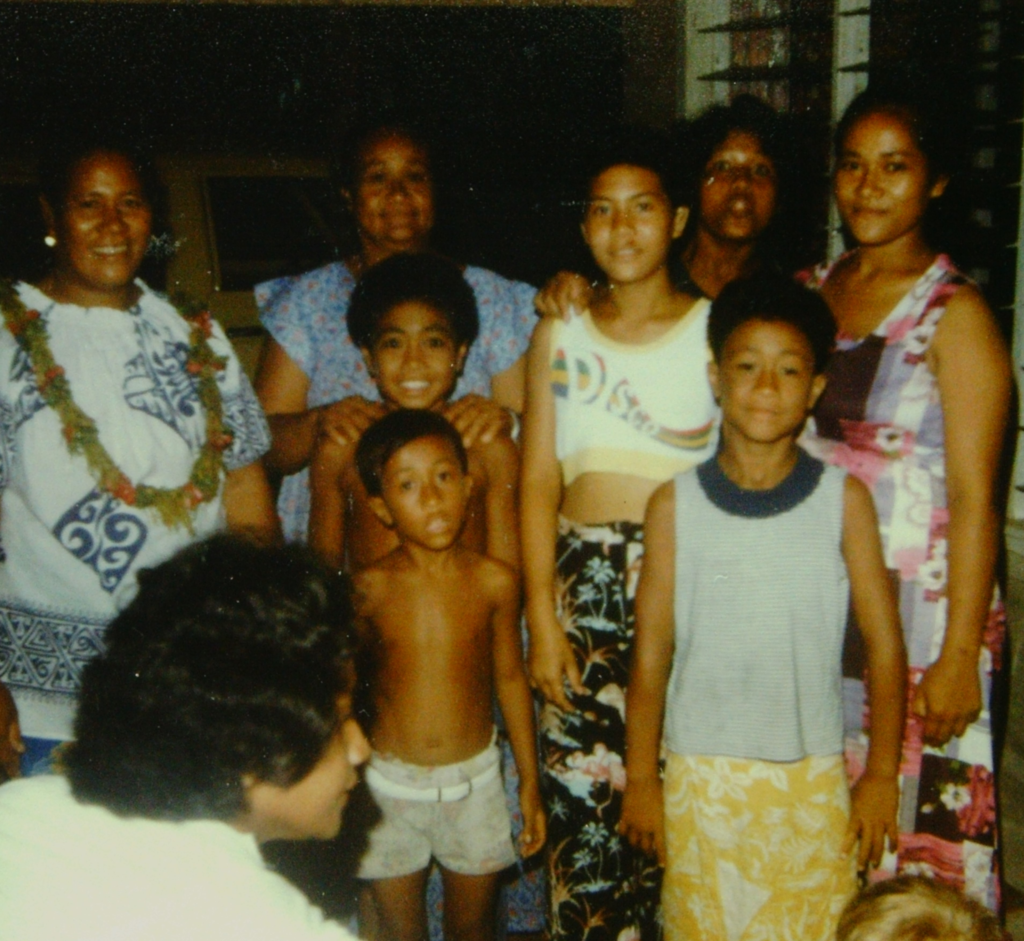
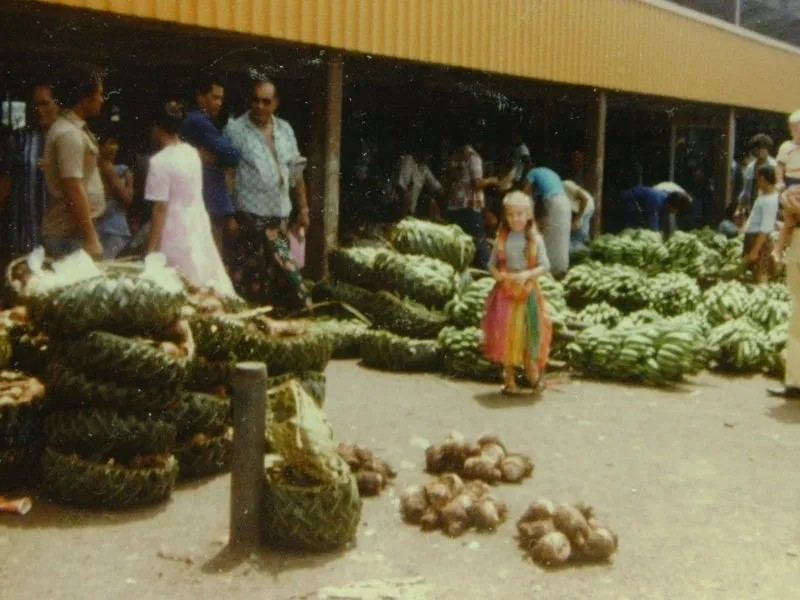
Initially, most of our contacts were other Americans in the Church housing complex, who primarily kept to themselves. Kathy soon learned enough Samoan to haggle at the open market in Apia and socialize in town. The Samoans loved Aaron’s light-colored hair and blue eyes, which prompted them to drop prices at the open market. We ventured outside the expat compound to expand our social lives and became friends with many Samoans. They, in turn, often welcomed us into their homes. We learned to love and to cook Samoan food. We missed these friends dearly when it was time for us to return home.
Kathy looked for a musical outlet where she could perform with her flute. She found a music group that consisted of a Samoan matai, two Europeans, an Australian, and a woman who had achieved some top hits in New Zealand. A musical problem surfaced that Kathy hadn’t even been aware of. The different musical terms used in different parts of the world. When the band leader talked about someone missing their quavers, she had no idea he was talking about quarter notes that she had missed. The group became close. After practice, the rest of the group would break out beers each Wednesday, and Kathy would go home with our newborn son. One time they asked Kathy to stay and showed her they had gotten some orange Nehis just for her. How could she refuse? It turned out that they had many questions about the Church and the new temple that was being constructed in Apia. After that, she hung around after each practice, drinking her orange and grape sodas. The group went on to perform in local bars, where the Samoan Prime Minister started watching them. He approached them and asked if they would provide background music while he entertained dignitaries at his mansion. So, they became the official band of Samoa. Looks pretty good on her musical resume.
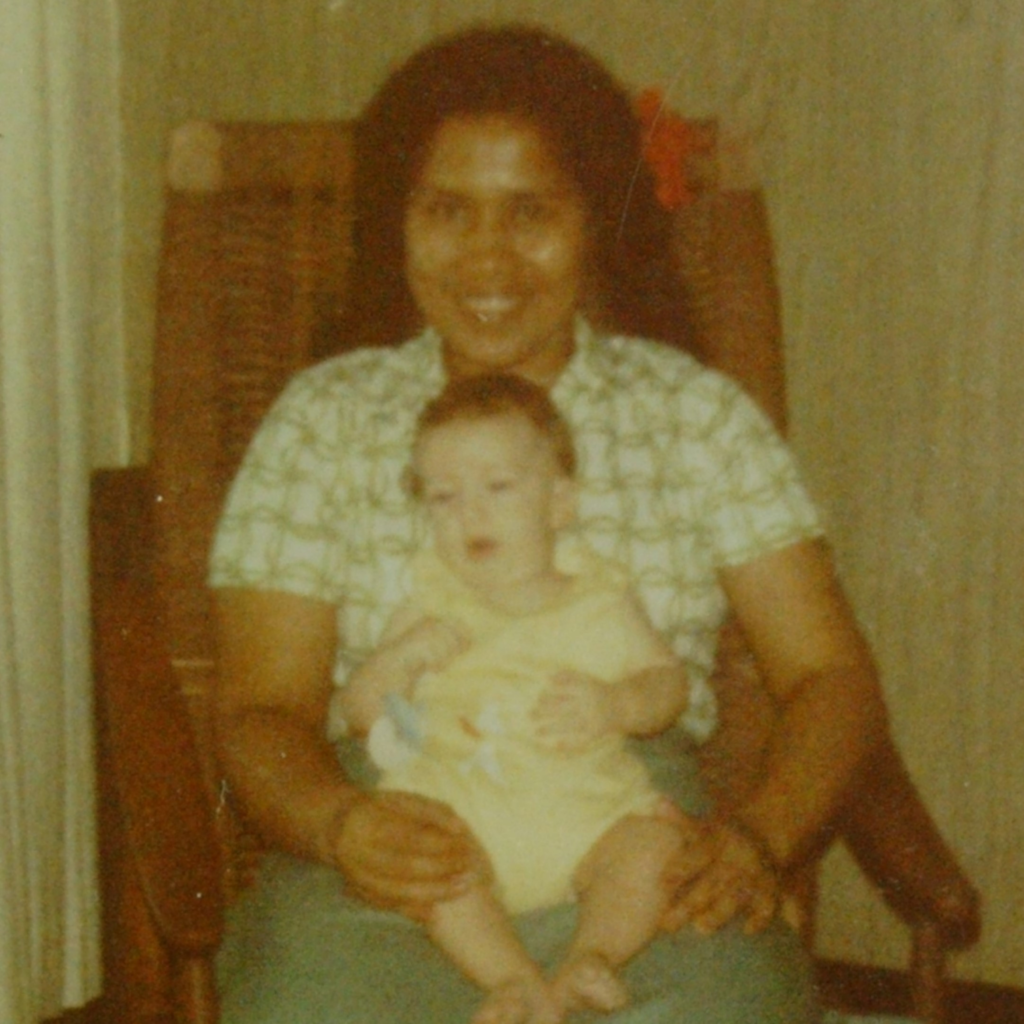
Sa Ama holding Ben
We had a full-time housekeeper while there. Since wages were low in Samoa, the cost of having her help was irresistible. We hired Sa Ama, who was saving up to serve a Church mission. She became a close family friend. Melissa, at four, attended a local preschool. Once, Melissa was talking and used words she learned from the preschool boys that caused Sa to blush. I guess the kids at preschool were educating Melissa. Sa said that Melissa had no business hanging out with the boys who used those words and should never repeat them. Sa wanted to show us Savai’i, the other main Samoan island, where she had grown up. Kathy’s parents were visiting and joined us for the trip. We took a ferry across to Savai’i and drove around the island. Sa stopped us to let us talk with residents of the villages we passed and to enjoy eating with them. We then stopped for the evening about halfway around the island in her home village. We had a fiafia (Samoan party), and spent the evening singing and dancing together. In the morning, we ate and finished our tour and took the ferry back to Upolu, the island we lived on.
The bugs in Samoa were giant. The cockroaches were 2 or 3 inches long and could fly. If you sprayed one with Black Flag he would then fly right at you until the poison killed him. I once killed a centipede in our house that was a foot long. There were lizards we could hear marching around in our attic. But no snakes. Kathy was happy to have no snakes. Once, Kathy and I were driving along when I looked at her to see a giant 5-inch spider inside the passenger window next to her. I told her to keep looking at me. I pulled over, went to her side of the van, opened the door, and knocked the spider on the ground. If she had seen it while we were driving, there surely would have been an accident.
I gained an appreciation for zoning laws while there. We lived a few hundred feet from a bar, La Tanoa, that stayed open daily until 2 AM. The bar was a fale, which has a roof but no walls. They had a live band each night that played at full volume. We eventually learned to sleep through anything.
One night at about 1 AM, Kathy heard foot steps on the mats in the hallway that ended up in our bedroom. She assumed that Aaron had awakened and was coming to us. When she rolled over to look, there was a man standing over us. Kathy screamed “Get out! Get out!” I assumed she was yelling at a cockroach. When she finally awoke me I realized it was my job to chase him. Fortunately for me, he was faster and got over the fence before I got out of the house. We later heard him at the bar down the way bragging about it.
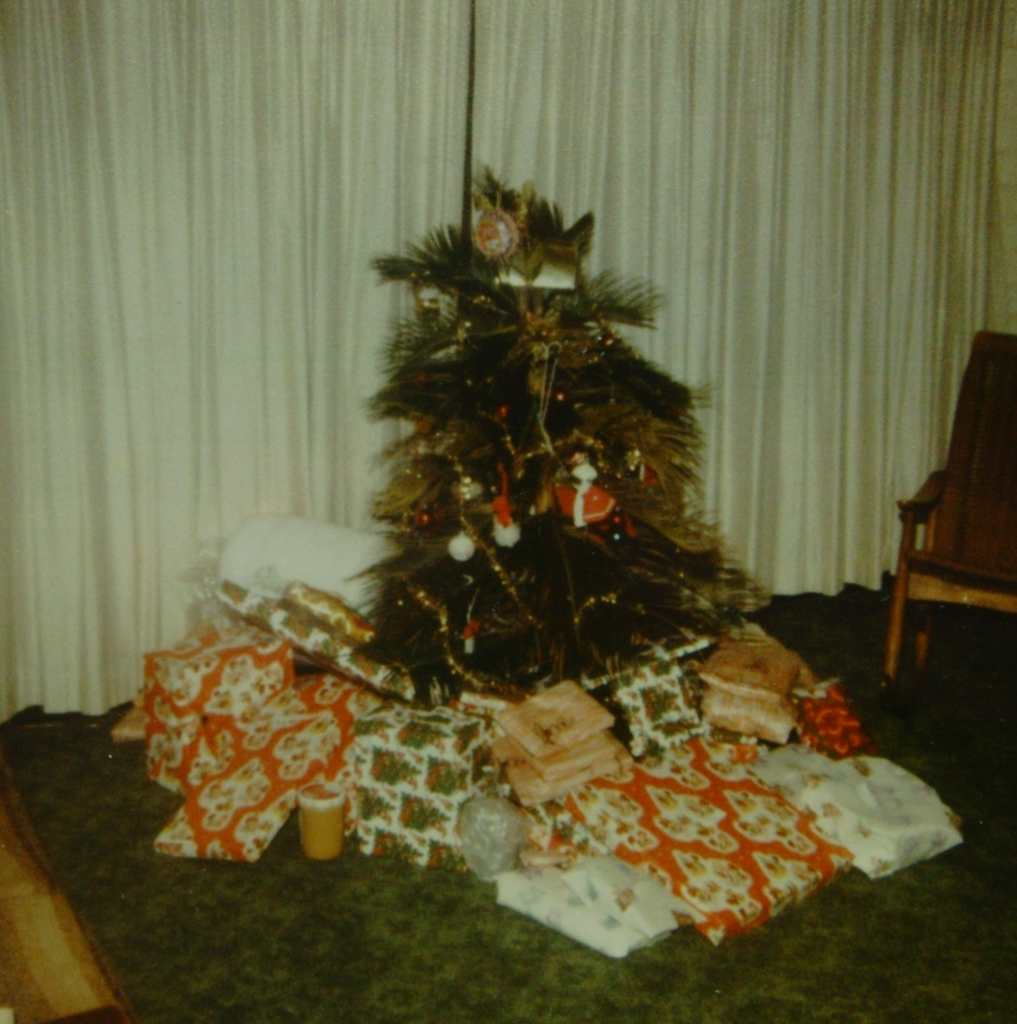
Our Christmas tree was a banana tree with palm fronds punched into it.
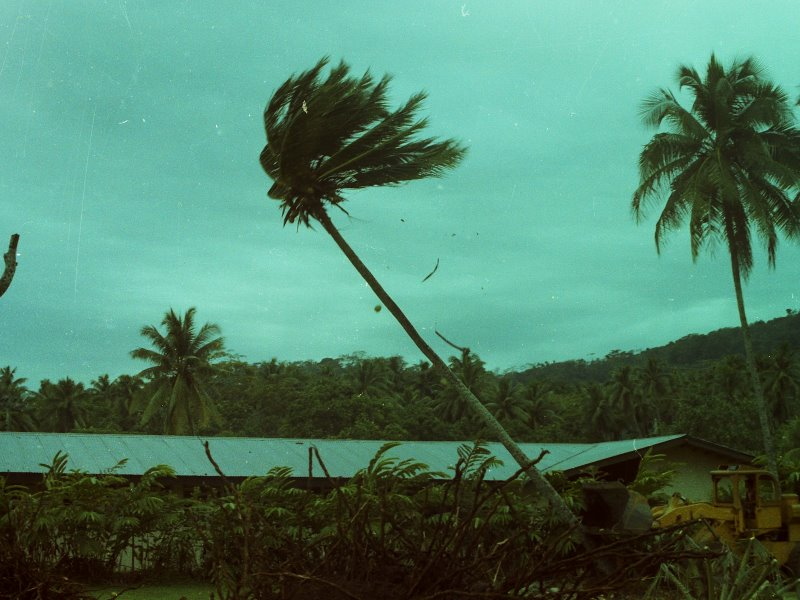
One time, we were hit by a tropical storm that brought 30 inches of rain in a week. I was in Apia when the torrent started. I headed for home, but the water had risen well above the bridge when I got to the stream outside our housing compound. I was driving a Toyota FJ Cruiser, which sat high like a Jeep, but I ended up with water on the floors when I crossed the bridge. A friend, Charles Schwenke, had his home severely damaged when the stream changed its course, running directly into his house. Kathy was driving our little Suzuki van and turned a corner. She saw a puddle as she turned. Unknown to her, the road had washed away under the puddle, and the van started rolling over and sinking into the hole. Some Samoan men and women were standing at the corner. The women opened the van doors, lifted the children, and escorted Kathy out. The men picked up the entire van from the water before it sank and set it down on dry ground. We love the kind Samoan people.
The water supply was cut off during the tropical storm, and we had no running water. The kids took showers out in the rain with bathing suits and soap. We would catch the rain runoff from the roof and store it in the bathtub for laundry and toilets. We then kept the bathroom door closed. However, year old Ben got into the bathroom somehow and fell into the bathtub. Kathy saw the open door and went inside to investigate. She found Ben underwater at the bottom of the tub, looking up at her, not breathing. She quickly pulled Ben out of the water and cleared his airways, helping him breathe again. She then handed me a wet crying baby, sat down, and started crying hysterically. I understood when I heard the story.
While in Samoa, I was tasked with replacing myself with a local Samoan when it was time to go home. Previously, they had always filled my position with an expatriate. True to the charge I was given, I went looking for a qualified local when an opening came up in my department. I came to know Molisa Tavete, interviewed him, and selected him to fill the opening. Molisa had a non-accounting degree from BYU-Hawaii. He knew nothing about accounting, but I sensed a man of integrity who would do all he could to fill the position. When I hired him he agreed to receive accounting lessons from me. I took some heat for choosing someone without accounting training, but I stood my ground. I spent the next few months teaching him accounting, and he took it from there and ran with the assignment. He proved fearless in ensuring that all spending adhered to established Church policies. Later, when I returned home, he replaced me. In later years, he even replaced my boss there.
My boss did not like me the moment I stepped off the plane. He had someone else in mind to fill the opening, but he was overruled. His effort was to prove they had made a mistake by assuring that I would fail. His criticism of me grew increasingly intense. His weekly reports to Hawaii and Salt Lake City told them of my incompetence and the contention caused by me. He began opening all my mail before it got to me to find “evidence” against me. He confronted me with what he thought was proof that I was a source of conflict. After more than a year of hostility, I gave up and resigned. His boss stepped in and declared me disloyal to the Church based on the negative feedback he had been receiving. He wrote to Salt Lake that I should never be considered for Church employment again because of “the contention I caused”. Further, he stated that I would have to pay for my way home. As you can imagine, this was a challenging moment. We struggled to know how to react to this declaration. How could our leaders treat us this way? We realized that the Church is about our relationship with our Heavenly Father and Jesus Christ, not with its members. Regardless of the outcome, we decided to remain devoted members of the Church. The gospel of Jesus Christ is perfect, and its believers are not.
Those in Salt Lake City who knew me before my leaving for Samoa appealed to the Presiding Bishopric’s Office on my behalf. They pointed out the inconsistency between my work reviews before I left for Samoa and those I received while I was there. I was then offered the position of Payroll Manager for the Church in Salt Lake City. All my moving expenses were reimbursed once I got home. One of the managers in Salt Lake City handed me a stack of the reports he had received from my boss criticizing me. This was the first time I knew what they were being told.
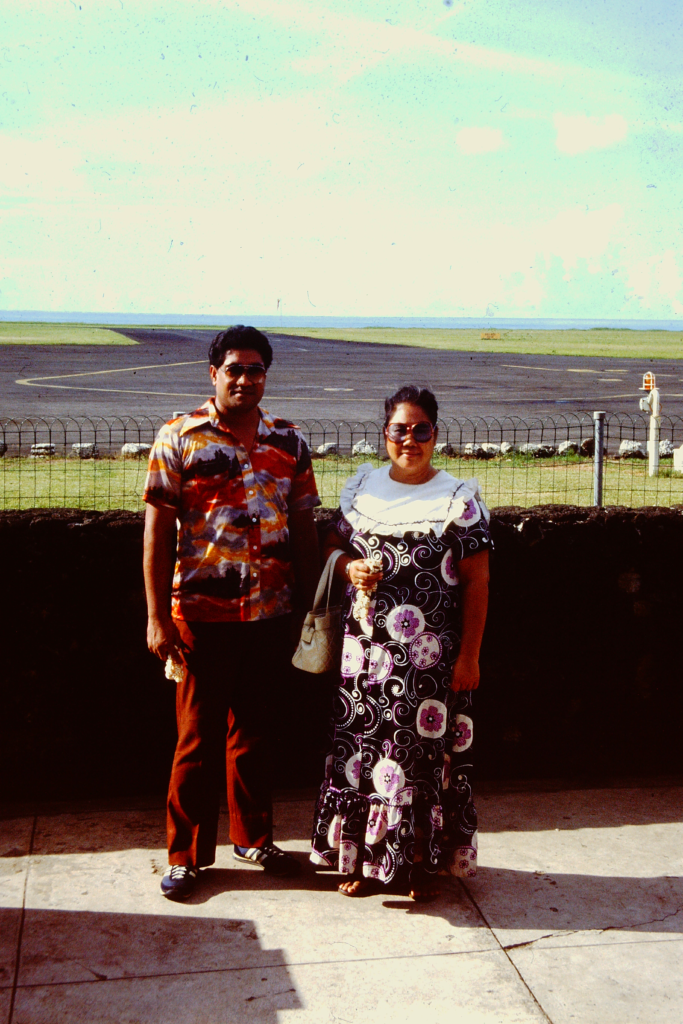
On our last Sunday in Samoa, the ward congregation sang “Tofa Mi Felene” (“Goodbye My Friend”) to us. While singing, many congregation members came up to us one at a time and hung leis around our necks. What a lovely final memory of Samoa.
We then headed back to resume life in Kaysville.
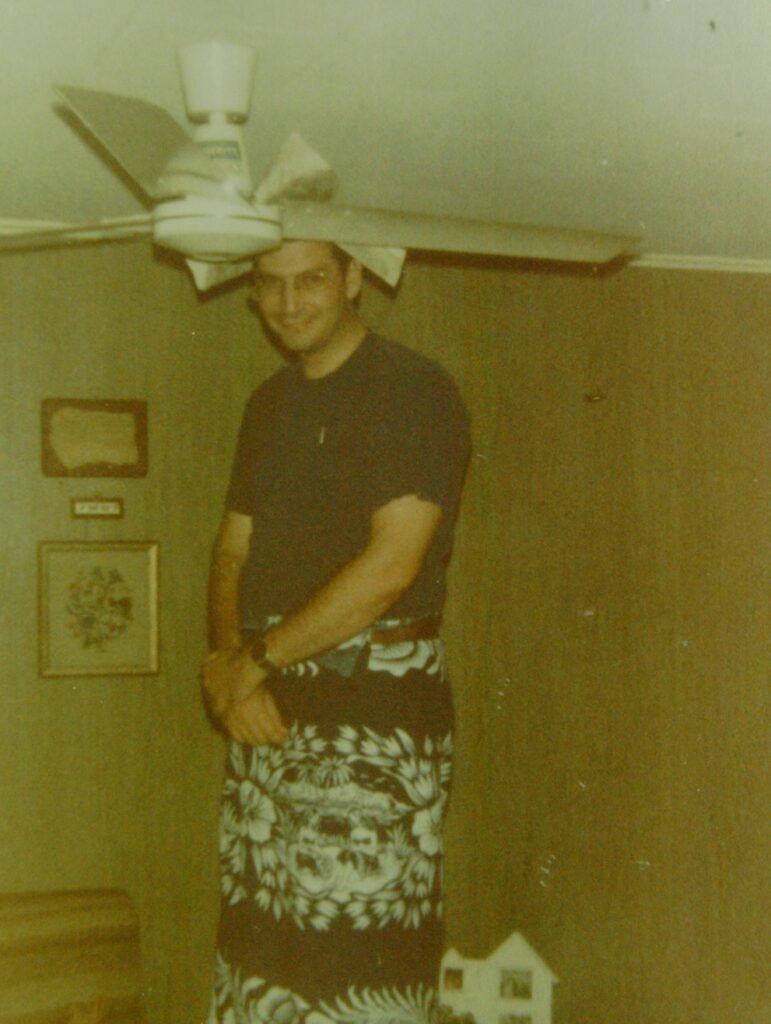
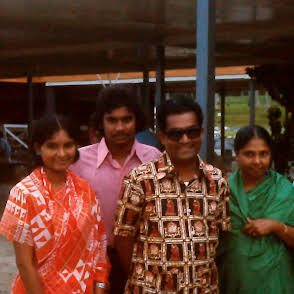
Edwin Dharmaraju became a friend of mine in Samoa. He was our elders’ quorum president. We were often in his home and he in ours. He used to kill me off with his curry rice. There is an incredible story about his conversion that happened a few years before I arrived in Samoa. Edwin was quiet about it but I read the story from other sources. Richard Ashby was a young doctor in northern California. Richard and his wife, Lillian, were called to a service mission in a hospital in Samoa. Lillian was recovering from cancer at the time of their call, and the call shocked family members. They left with their four children, aged four to twelve years old. They were concerned about her health, but but the calling felt right. At the Los Angeles Temple, they crossed paths with Spencer W. Kimball, who was the President of The Church of Jesus Christ of Latter-day Saints at the time. He gave her a blessing. The blessing simply stated that her mission would be a success.
While in Samoa, the Ashby’s met the Dharmaraju’s, who were from India, and felt they would be great members of the Church. Edwin and Elsie were from a strong Anglican family of many generations in India. They were unwilling to consider a change in religion and its potential impact on family relationships. But they did become good friends with the Ashby’s. The cancer aggressively returned to Lillian about nine months into her mission. Just before she died in Samoa, she felt prompted to write her testimony in a white triple combination scripture set. She asked Richard to present the book to Edwin and Elsie after her death, which he did. She passed away and was buried in Samoa. Afterwards, Richard Ashby had a serious car accident that put him in the hospital for weeks. Despite many complications from the accident, he completed his mission and returned home with his children. Many wondered why they had served in Samoa at such a high personal cost and what was accomplished. A few months later, Edwin opened the gifted scriptures and began reading the Book of Mormon. He instantly knew it was the word of God. Elsie also read and was converted. They were baptized in 1977, along with four children. A few months later, they visited their hometown of Hyderabad, India, for a family wedding. They shared their newfound faith around the village. Many wanted to know more. The problem, though, is that it was illegal in India at the time for someone to proselyte unless he was a native of India. As a result, the Church had no presence in India. Edwin wrote a letter to the Church leadership in Salt Lake City explaining the urgent need to send missionaries into his village to reach the interested villagers. Shortly after, Edwin and Elsie received their answer and were called on a 3-month mission to India to teach, baptize, and organize a Church branch in their home village. (Be careful what you ask for.) They baptized 22 villagers in December 1978 and then formed India’s first branch. Fourteen years later, the first Indian stake was organized in their village. Plans for building a temple in India immerged 40 years after. Looking back, you can see the big picture of the Lord. He needed a temple in India, and He sent missionaries to a couple living in Samoa.
The story of Kathy & Ron Goodlad
© 2025 The Goodlads